
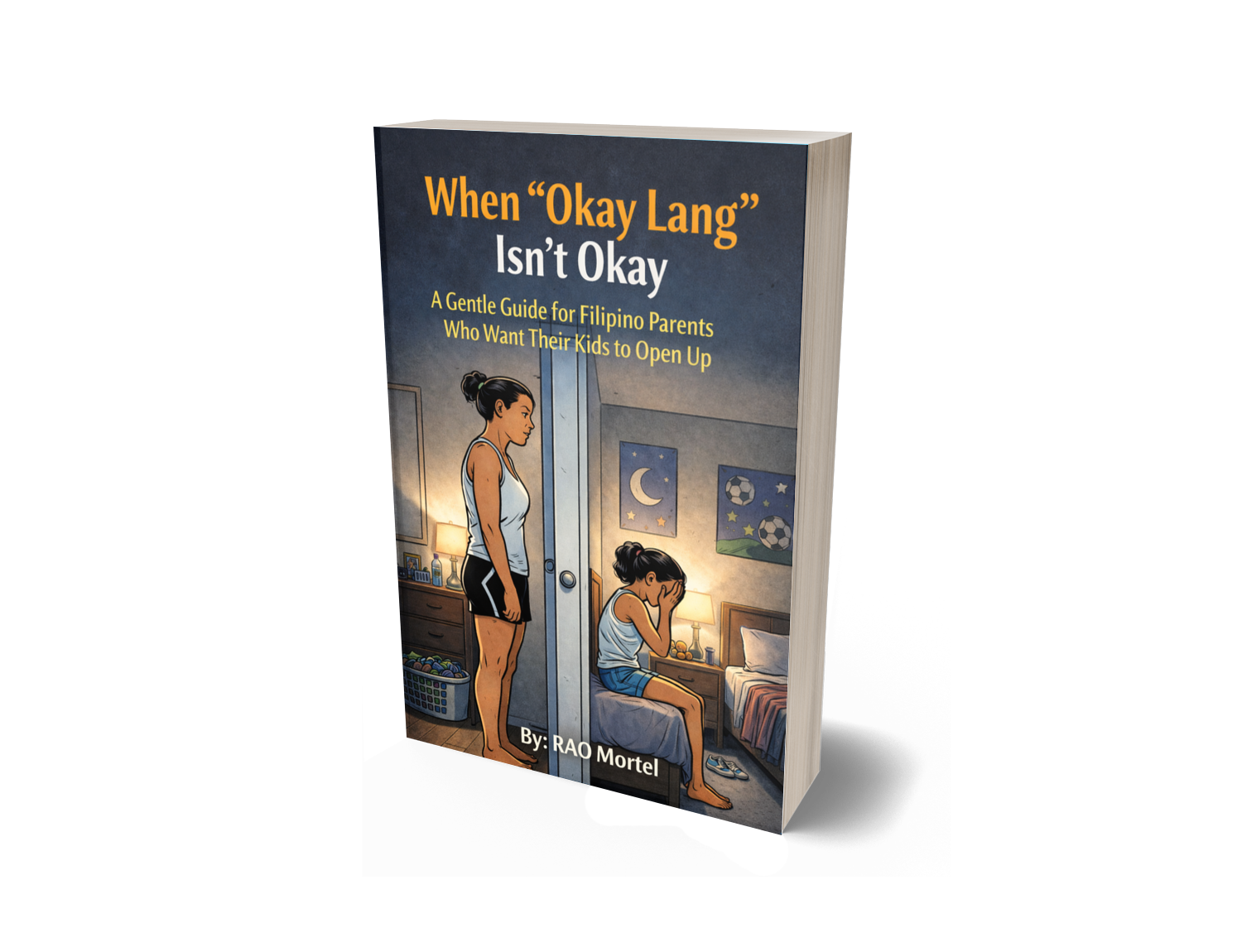
When “Okay Lang” Isn’t Okay
A gentle, culturally grounded guide for Filipino parents who want their kids to open up—without pressure, lectures, or fear.
Inside this free guide, you’ll discover how to:
Recognize what “okay lang” really means—and when it’s a sign your child needs you more
Break the generational communication patterns that shut kids down (even when intentions are good)
Create emotionally safe conversations your child actually wants to join
Respond in ways that invite honesty instead of silence, withdrawal, or defensiveness
Build trust daily—without long talks, sermons, or forcing sharing
Introduce your idea
I help Filipino parents who love their children deeply—but feel the painful gap when conversations stop at “okay lang.”
I created this guide because many of us were raised to be strong, quiet, and respectful—but not always emotionally open. This isn’t about blaming parents. It’s about learning a better way—one that honors our culture while protecting our children’s emotional health.
This guide is gentle, practical, and rooted in real Filipino family experiences.
What others say
"The Okay Lang book by Rao Digitals is a comforting and relatable read for moms who are navigating the emotional challenges of parenting. It gently reminds mothers that it’s okay to have hard days while offering
encouragement to keep communication and connection with their children open. A heartfelt book that makes moms feel seen, understood, and less alone." —joreen ocampo
"The Okay Lang book by Rao Digitals speaks directly to mothers who are doing their best, even on the days when things feel overwhelming. Its warm and understanding tone reassures moms that their feelings are valid while encouraging patience, empathy, and open communication at home. A gentle reminder that small moments of understanding can make a big difference in a family. —allen cordilla.
Sign up for our newsletter to get access
I wrote When “Okay Lang” Isn’t Okay because there was a moment that stayed with me longer than I expected.
A child said “Okay lang.”
In Filipino homes, “okay lang” is often the safest answer. It means “I don’t want to worry you.” It means “I don’t know how to say this without disappointing you.” Sometimes, it means “I tried to be strong, but I’m tired.”
We don’t raise our children to hide their feelings. We raise them with love.
So our children learn early: it’s safer to stay silent than to be honest.
I wrote this book because I don’t want our kids to grow up believing they have to be “okay” to be loved.
My purpose is to help Filipino parents see what’s often left unsaid—to hear the emotions hiding behind short answers, forced smiles, and quiet obedience. This guide is an invitation to slow down, to soften our voices, and to create moments where our children feel safe enough to tell the truth.
Not perfect words.
If this book helps one parent pause before saying “Okay ka lang ba?” and instead truly listen…

